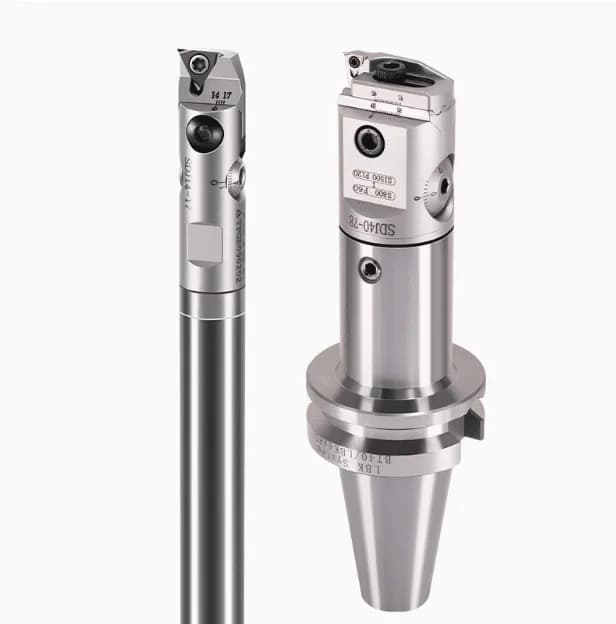
What is Single Point Boring?
Definition and Basic Concepts
Single point boring is a machining process used to enlarge and finish existing holes with high precision. Unlike drilling, which creates new holes, boring refines the dimensions of pre-drilled or previously bored holes to achieve tighter tolerances and superior surface finishes.
At its core, single point boring employs a single-point cutting tool, known as a boring bar, to remove material from the interior of a workpiece. The boring bar remains stationary while the workpiece rotates against it. This method is often referred to as internal turning, emphasizing its role in refining the internal features of a workpiece.
Applications and Industry Use
Single point boring is essential in industries where precision is paramount, such as aerospace, automotive, and tooling. It's used to create precise internal diameters in components like engine cylinders, bearing housings, and other critical parts where dimensional accuracy and surface integrity are vital.
Comparison with Other Machining Methods
While drilling, milling, and reaming are commonly used for creating and refining holes, single point boring offers unique advantages in terms of precision and versatility. Unlike drilling, which is faster but less precise, boring allows for tighter tolerances and smoother finishes. Compared to milling, boring focuses on internal features with higher accuracy, and unlike reaming, which is faster but less versatile, boring can handle a broader range of hole sizes and complexities.
The Working Principle of Single Point Boring
Understanding how single point boring operates is essential for optimizing its performance and achieving the desired outcomes.
Tool Type: The Role of the Boring Bar
The boring bar is the heart of the single point boring process. It consists of a single-point cutting tool mounted on a holder, which is fixed in the machine. The design of the boring bar allows for precise material removal, ensuring that the internal diameter of the workpiece meets the specified tolerances.
Machine Operation: Workpiece Rotation and Tool Stability
In single point boring, the workpiece rotates against the stationary boring bar. This setup ensures that the cutting action is consistent and controlled. The stability of the boring bar is crucial; any movement or vibration can compromise the accuracy and surface finish of the hole. Therefore, maintaining proper alignment and minimizing deflection is essential.
Unique Aspects of Internal Turning
Internal turning with single point boring differs significantly from external turning on a lathe. The primary focus is on the interior dimensions, requiring specialized setups and considerations to maintain precision. The process demands meticulous control over factors like tool alignment, cutting speed, and feed rate to achieve the best results.
Types of Single Point Boring
Single point boring can be performed on different types of machinery, each offering distinct advantages and suited for specific applications.
Boring on a Lathe
When boring on a lathe, the boring bar is stationary and gripped in a tool block. The workpiece rotates against the fixed tool, allowing for precise internal machining. This method is ideal for producing accurate internal diameters in cylindrical workpieces.
Advantages:
- High precision and tight tolerances
- Suitable for large workpieces
- Versatile for various internal shapes
Disadvantages:
- Limited to cylindrical geometries
- Setup can be time-consuming
Boring on a Machining Center
In contrast, boring on a machining center involves a spinning boring head that removes material in a single pass. This approach can be more efficient, especially for complex internal features and smaller workpieces.
Advantages:
- Faster material removal
- Capable of handling complex geometries
- Suitable for smaller workpieces
Disadvantages:
- Potentially lower precision compared to lathe boring
- More complex machinery and setup
Pros and Cons of Each Type
Choosing between lathe and machining center boring depends on factors like the size of the workpiece, required precision, and production volume. Lathe boring excels in high-precision applications for larger parts, while machining center boring offers speed and versatility for smaller, more complex tasks.
Key Considerations in Single Point Boring
Several critical factors influence the success of single point boring operations. Addressing these considerations ensures optimal performance and high-quality outcomes.
Vibration and Surface Quality
Chatter, or vibration, is a common issue in boring that can degrade surface finish and reduce tool life. Minimizing vibrations through proper machine setup, tool selection, and cutting parameters is essential for achieving smooth surfaces and maintaining tool integrity.
Boring Bar Stick-Out Length and Depth of Cut
The stick-out length of the boring bar, typically 3-6 times the tool diameter, plays a significant role in stability. A proper stick-out minimizes deflection and vibration, enhancing precision. Additionally, the depth of cut must be carefully managed; finishing passes generally require deeper cuts, while roughing passes benefit from lighter cuts to maintain control and reduce stress on the tool.
Workpiece Security and Tool Alignment
Ensuring that the workpiece is securely mounted and perfectly aligned with the boring bar is paramount. Any misalignment can lead to dimensional inaccuracies and poor surface finishes. Using appropriate clamping systems and verifying alignment before machining helps maintain consistency and precision.
Chip Evacuation and Coolant Application
Effective chip evacuation prevents chip accumulation, which can interfere with the machining process and damage the workpiece or tool. Proper coolant application aids in chip removal, reduces heat buildup, and prolongs tool life.
Best Practices for Single Point Boring
Adopting best practices can significantly enhance the efficiency and quality of single point boring operations.
Tool Selection and Size Optimization
Using the largest boring bar possible, without hindering chip evacuation, enhances stability and reduces vibrations. A larger tool increases rigidity, allowing for more precise material removal and better surface finishes.
Adjusting Cutting Parameters
Experimenting with feeds and speeds is vital for finding the optimal balance between material removal rate and tool wear. Adjusting these parameters based on the material and desired finish can lead to improved performance and extended tool life.
Preventing Vibration and Enhancing Stability
Taking heavier depths of cut when feasible can help reduce vibrations by increasing the cutting force's consistency. Additionally, utilizing anti-vibration tools or smart boring systems can further stabilize the machining process, leading to higher precision and smoother finishes.
Aligning the Boring Bar with the Workpiece Centerline
Proper alignment ensures that the boring bar accurately follows the intended path, preventing deviations that could result in dimensional inaccuracies. Regularly checking and adjusting the alignment minimizes the risk of errors and enhances overall machining quality.
Single Point Boring vs. Other Machining Methods
Comparing single point boring with other machining techniques like drilling, milling, and reaming highlights its unique strengths and suitable applications.
Boring vs. Drilling
Purpose: Boring enlarges existing holes, refining their dimensions, while drilling creates new holes.
Tool Type: Boring uses single-point cutting tools (boring bars), whereas drilling employs spiral drill bits.
Precision: Boring achieves tighter tolerances (±0.002 inches) compared to standard drilling (±0.005 inches).
Surface Finish: Boring produces smoother finishes (Ra of 32-64 microinches) than drilling.
Material Removal Rate: Drilling offers a faster material removal rate due to its simpler cutting action.
When to Use: Choose boring when high precision and fine surface finishes are required. Drilling is suitable for faster, less precise hole creation.
Boring vs. Milling
Purpose: Boring focuses on precise hole finishing, whereas milling shapes surfaces and contours.
Tool Type: Boring uses single-point tools, while milling employs rotating multi-point cutters.
Precision: Boring offers higher precision (tolerances as tight as ±0.002 inches) compared to milling (typically ±0.005 inches).
Surface Finish: Boring provides superior surface finishes (Ra of 32-64 microinches) compared to milling (Ra of 64-125 microinches).
Setup Complexity: Boring requires more precise setup to avoid tool deflection, whereas milling setups are generally simpler.
When to Use: Opt for boring when internal precision is paramount. Milling is better for external shaping and complex contours.
Boring vs. Reaming
Process: Boring enlarges existing holes, while reaming refines holes for accuracy and surface finish.
Tool Type: Boring uses single-point cutting tools, whereas reaming employs multi-point cutting tools (reamers).
Surface Finish: Reaming produces superior surface finishes compared to boring.
Material Removal Rate: Boring has a lower material removal rate due to precision requirements.
Key Points to Consider:
- Boring is more versatile for different hole sizes and machine tool runout
- Reaming is faster and more cost-effective with lower tooling and equipment costs
- Boring offers precise positional accuracy but may have a coarser surface finish compared to reaming
When to Use: Use reaming for faster, high-quality surface finishes on existing holes. Boring is ideal for versatile, precise internal machining.
Safety Considerations in Single Point Boring
Safety is paramount in any machining operation. Single point boring involves specific risks that must be addressed to ensure a safe working environment.
Personal Protective Equipment (PPE)
Operators should always wear appropriate PPE, including:
- Safety Glasses or Goggles: Protect eyes from flying debris
- Hearing Protection: Guard against noise exposure from machinery
- Gloves: Prevent hand injuries from tool handling or contact with materials
Machine Safety
Regular inspection and maintenance of boring machines are crucial:
- Check for Loose Parts: Ensure all components are secure to prevent accidents
- Worn Components: Replace any parts showing signs of wear
- Safety Features: Verify that all safety guards and emergency stops are functioning correctly
Chip Management
Effective chip evacuation is essential for safe and efficient machining:
- Coolant Systems: Use appropriate coolant to improve chip flow
- Chip Collection: Ensure chips are adequately collected to prevent accumulation around the machine
Common Issues and Solutions in Single Point Boring
Even with the best practices, challenges can arise during single point boring. Here are some common issues and how to address them.
Vibration and Chatter
Problem: Vibration can lead to poor surface finishes and reduced tool life.
Solutions:
- Proper Setup: Ensure the boring bar is correctly aligned and secured
- Tool Selection: Use a larger boring bar to increase stability
- Cutting Parameters: Adjust feeds and speeds to minimize vibration
Tool Deflection
Problem: Deflection can cause dimensional inaccuracies and uneven surfaces.
Solutions:
- Stick-Out Length: Maintain an optimal stick-out length (3-6 times the tool diameter)
- Tool Rigidness: Use the stiffest possible tool holder
- Depth of Cut: Manage depth of cut to reduce stress on the tool
Poor Surface Finish
Problem: A rough surface finish can affect the functionality and appearance of the workpiece.
Solutions:
- Cutting Parameters: Optimize feeds and speeds for a smoother finish
- Tool Sharpness: Ensure the boring bar is sharp and free from wear
- Coolant Use: Apply adequate coolant to reduce heat and improve surface finish
Conclusion
Single point boring is a versatile and precise machining technique essential for achieving high-quality internal diameters and superior surface finishes. Compared to other methods like drilling, milling, and reaming, boring offers unparalleled precision and versatility, making it indispensable in industries where accuracy is critical.
By understanding the working principles, types, key considerations, and best practices of single point boring, you can optimize your machining operations for better performance and higher quality outcomes. Whether you're refining existing holes or working on complex internal features, single point boring provides the precision and control needed to meet demanding specifications.