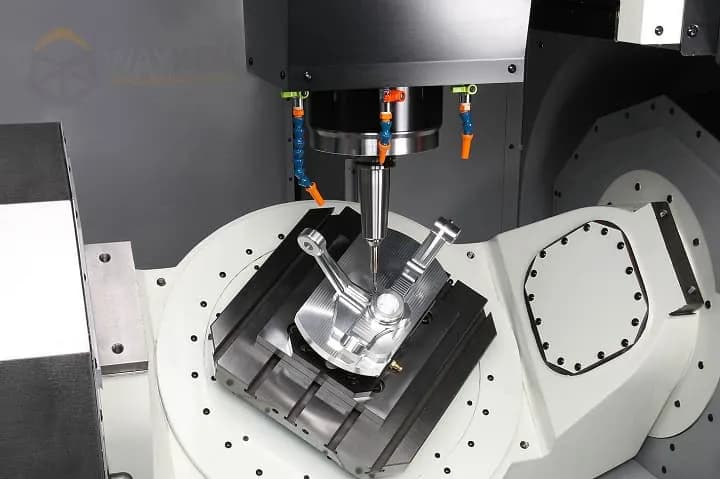
CNC? What Exactly Is It?
What is CNC?
CNC stands for "Computer Numerical Control," representing automated machine operation through computer commands. This technology controls equipment like milling machines, lathes, and routers without requiring manual intervention during cutting operations.
How Does CNC Machining Work?
The core process is subtractive manufacturing—removing excess material from raw stock to achieve desired shapes. Operators design parts using CAD software, translate designs into machine instructions (G-code), and the CNC controller directs cutting tools with high precision.
Key characteristics: automation and high precision, distinguishing this approach from additive manufacturing.
A Brief History
CNC technology emerged in 1940s America, driven by aerospace manufacturing demands. Pioneers John T. Parsons and MIT developed early concepts that evolved from Numerical Control (NC) into modern Computer Numerical Control as computing power advanced.
Behind the Scenes of CNC Machining: The Workflow Explained
Step 1: From Idea to Drawing (CAD - Computer-Aided Design)
Engineers create digital models using software like AutoCAD, SolidWorks, or Fusion 360, defining geometry, dimensions, and tolerances. Files export in standard formats (STEP, IGES) for downstream processing. Design for Manufacturing (DFM) means designing with consideration for whether the part can be efficiently produced.
Step 2: Translating Design Language into Machine Language
CAM (Computer-Aided Manufacturing) software analyzes models and generates toolpaths—the precise movement trajectories the tool must follow during machining to remove material. The software converts these into G-code (geometric movement commands) and M-code (machine function controls).
Critical bridge components include:
- Post-processors: Convert generic toolpaths to machine-specific language
- Firmware: Determines which G-code formats specific controllers recognize
Step 3: Meticulous Preparation, Precise Execution
Essential preparation includes:
- Loading programs into machine memory
- Securing workpieces with fixtures or vises
- Installing cutting tools
- Setting work offsets and tool compensation data
Step 4: Automated Machining
The CNC controller executes instructions sequentially, with servo motors positioning axes while the spindle rotates at specified speeds. Many modern machines use closed-loop feedback systems with encoders to verify actual positions against commanded positions.
Common Machine Types
CNC Milling Machines
Multi-point rotating cutting tools remove material from fixed workpieces. 3-axis mills move left/right (X), front/back (Y), and up/down (Z). Advanced 5-axis machines approach workpieces from complex angles, enabling single-setup machining of intricate parts like turbine blades.

CNC Lathes / Turning Centers
Rotating workpieces engage linear-moving cutting tools, ideal for cylindrical and rotational features. Modern turning centers feature live tooling and C-axis positioning for complex shapes.

CNC Routers
High-speed rotating tools for softer materials—wood, plastics, foam, soft metals. Gantry structures typically feature lighter construction than mills.

CNC Plasma Cutters
Ionized gas jets reaching tens of thousands of degrees Celsius cut conductive metals like steel, aluminum, and copper at high speeds.

Additional machines include laser cutters (precision cutting with heat-affected zones), waterjet cutters (cold cutting suitable for heat-sensitive materials), EDM machines (electrical discharge for ultra-hard materials), and grinding machines (finishing operations).
What Materials Can CNC Machine?
Metals
- Aluminum alloys: Lightweight, good machinability, corrosion-resistant
- Steel: Carbon steel, stainless steel (corrosion-resistant), tool steel (hardness)
- Titanium alloys: Exceptional strength-to-weight ratio, biocompatible, difficult to machine
- Copper/Brass: Corrosion-resistant, excellent conductivity
Non-Metals (Plastics)
Engineering plastics include ABS, nylon, polycarbonate, POM, and acrylic. High-performance options like PEEK handle extreme temperatures and chemical exposure. PTFE offers exceptional friction reduction.
Wood & Composites
Solid hardwoods and softwoods, engineered woods (plywood, MDF), carbon fiber reinforced polymers, and glass fiber composites all machine effectively.
Specialty Materials
Ceramics, foam materials, and stone require specialized processes—often using diamond tooling, laser, waterjet, or EDM rather than conventional cutting.
The Superpowers of CNC Machining
Precision and Repeatability: Computer control achieves micrometer-level accuracy (±0.025 mm possible), with excellent batch consistency. This capability is critical for aerospace and medical applications.
Speed and Efficiency: Automated tooling and continuous operation dramatically reduce cycle times compared to manual methods. Automatic tool changers eliminate change-over delays.
Complex Geometry Capability: Multi-axis machines manufacture intricate shapes and freeform surfaces impossible through traditional machining.
Automation Benefits: Reduced operator dependency, improved safety (operators distance from cutting zones), and decreased physical labor intensity.
Additional strengths include production flexibility (easy program changes), minimal material waste, and simplified downstream assembly.
The Application Stage for CNC
Aerospace: Manufacturing engine components, structural parts, landing gear systems, and complex housings using difficult materials like titanium and superalloys.
Automotive: Engine blocks, cylinder heads, crankshafts, transmission gears, suspension components, and mold making for mass production.
Medical: Surgical instruments, biocompatible implants (joints, spinal devices, dental implants), prosthetics, and precision device housings.
Mold Making: High-precision injection molds, die casting molds, and stamping dies using hardened steel.
Prototyping: Rapid design validation using actual engineering materials, enabling functional testing before production.
Additional sectors include electronics (housings, heat sinks), consumer goods, energy equipment, marine applications, construction, woodworking, and artistic creation.
Comparison Table: CNC vs Traditional Manual Machining
| Feature | CNC Machining | Traditional Manual Machining |
|---|---|---|
| Accuracy | Very High, Micron-level | Depends on Operator Skill |
| Repeatability | Excellent, High Batch Consistency | Lower, Human-Affected |
| Speed/Efficiency | Fast, Highly Automated | Slow, Requires Continuous Operation |
| Complex Shapes | High Capability | Limited Capability |
| Automation | High | Low or None |
| Operator Focus | Programming, Setup, Monitoring | Manual Skill, Experience |
| Material Waste | Lower | Potentially Higher |
| Safety | Relatively Higher | Relatively Higher Risk |
Conclusion
CNC machining transforms digital designs into precision physical components through automated, computer-controlled material removal. Its combination of high accuracy, repeatability, speed, and complexity-handling capability makes it fundamental to modern manufacturing across virtually every industrial sector. Despite equipment investment and skill requirements, increasing accessibility through desktop machines and open-source solutions makes CNC technology an essential tool for designers, makers, and manufacturers pursuing precise, efficient production.